


 Είσοδος Συνεργατών

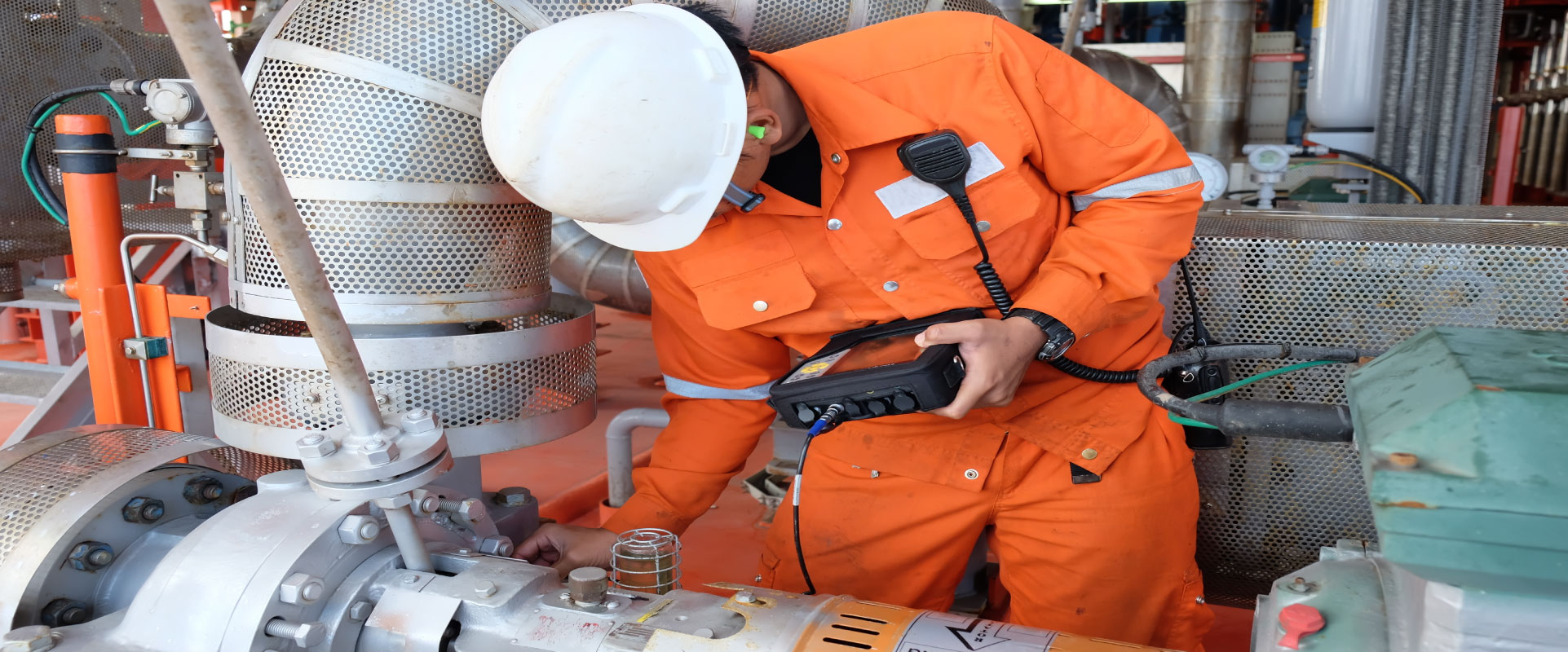
Vibration Analysis Category 2
ΠΡΟΓΡΑΜΜΑΤΑ | Συντήρηση και Αξιοπιστία Βιομηχανικού Εξοπλισμού
ΠΛΗΡΟΦΟΡΙΕΣ ΠΡΟΓΡΑΜΜΑΤΟΣ
Κωδικός:
113.23
Τίτλος:
Vibration Analysis Category 2
Διάρκεια (Δ.Ω.):
40
Περιγραφή:
BINDT PCN Accredited to ISO 18436-2 (BINDT PCN Certification Exam)
Δυνατότητα Πιστοποίησης:
YES
Συνεργασία :
BINDT
Γλώσσα Σεμιναρίου:
English
Who Should Attend
Managers, Engineers, Analysts, Supervisors,Technicians and Operators who wish to learn about basic vibration monitoring and analysis in the areas of Operations, Maintenance, Engineering, Reliability and Condition Monitoring for example from the following industries:
- Aerospace & Aviation
- Facilities, Banking & Utilities
- Food & Beverage
- Manufacturing
- Mining & Minerals, Cement & Fertilisers
- Oil & Gas, Petrochemical & Chemical
- Pharmaceuticals
- Power Gen, Transmission & Distribution
Course Objectives
This course is based on the ISO 18436-2:2014 certification program for Vibration Analyst Category II & is designed to prepare staff for the Category II Certification Exam. The course is accredited to BINDT PCN CM GEN App D.
VA Category II personnel are qualified to perform industrial machinery vibration measurements and basic vibration analysis using single channel measurements, with or without phase trigger signals, according to established and recognised procedures. They require all the knowledge, experience and skills expected of Category I, and in addition they shall at least:
- be able to define the measurement activities to be undertaken by a category 1 individual in the course of routine data collection;
- be aware of and capable of using the basic principles of signal analysis and, as such, can define acquisition and analysis settings to collect data appropriate to the machine(s) monitored;
- be able to perform basic (single channel) impact tests to determine natural frequencies;
- be able to interpret and evaluate test results and acceptance tests in accordance with specifications and standards;
- be able to diagnose common fault indications and recommend basic corrective actions commensurate with their area of machinery experience including carrying out single-plane balancing of rigid rotors with or without phase;
- be able to provide technical guidance to and instruct category 1 personnel.
Difficulty Level
Intermediate:
Note: VA Cat I Qualification is a pre-requisite for this course.
Course Content
- This course is in accordance with the ISO 18436-2 certification program for VA Category II. The following is covered:
Day 1
Condition Based Maintenance
Selecting CM Techniques- Task 1: Selecting CM Techniques (3†)
Range of CM Techniques, Measurement Intervals, Lead Time to Failure
Principles of Vibration – Part 1
Definition of Vibration, Single Degree of Freedom Systems, Basic Motion, Measuring Vibration
- Task 2: Measuring Speed
- Task 3: Vibration Waveform Exercises (3†)
Waveform Descriptors, Adding Sinusoidal
Vibrations- Task 4: Vibration Mixtures (4†)
- Task 5: Vibration Waveform Descriptors
Day 2
Principles of Vibration – Part 2
Vibration Parameters & Converting Units- Task 6: Calculating Parameters and
Converting Units
Time and Frequency Domain, Enveloping
Introduction to Resonance
Natural Frequency, Resonance, Critical Speeds Effects of Resonance, Resonance Plots, Identifying Resonance, Machine Self-excitation, Exciter (Shaker) Test, Hammer Test- Task 7: Hammer Test to Identify a Resonance
- Task 8: Case History – Main Circulation Pumps Isolation and mounting systems
- Task 9: Case History – Engine Test Pallet
Day 3
Data Acquisition – Instrumentation
- Task 10: Choice of Monitoring System
Online Monitoring Systems, Portable Vibration Data Collection Systems, Transducers, Transducer Characteristics, Examples of Vibration Transducers & Accessories, Mounting Transducers, Relative and Absolute Vibration Measurement
- Task 11: Performance of Different
Transducer Types
Data Acquisition – Measurement Vibration Measurement, Vibration Standards, Overall Vibration, Common ISO Vibration Standards, ISO 2372 and ISO 3945 (Superseded) Vibration Limit Zones, Vibration Severity Bandwidths, Relative Vibration- Task 12: Vibration Severity Exercises (9†)
- Task 13: Broadband Vibration Fault Exercise
- Task 14: Setting up and Taking
Measurements
Recognising Poor Data
Reasons for Poor (Invalid) Readings- Task 15: Recognising Invalid Readings (5†)
Poor Data Recognition Hints
Day 4
Monitoring Program Set-up
Setting up Measurements, Route-based Data Collection, Identifying Equipment, Recording Equipment Information, Machinery Types, Electric Motor Characteristics, Rolling Element Bearing Characteristics, Measurement Point Conventions- Task 16: Allocating Measurement Points Identifying Machines and Measurement Points
- Task 17: Identifying Machine Components
- Task 18: Recognising Asset Types
Typical Vibration Data Collection Parameters, Reports
Vibration Frequency & Signal Analysis
FFT Terminology, FFT Features, Waterfall Plot, Spectrum Resolution, Dynamic Range, Signal Clipping and Truncation, Filters, Analogue to Digital Conversion, FFT Application Fault Analysis
Fault Finding, Identify Machine Characteristics, Vibration Fault Finding Chart- Task 19: Recognising Common Faults (4†) Practical Fault Finding Examples
- Task 20: Vibration Frequency & Signal Analysis (8†)
- Task 21: Case History – Motor Driven Ball Mill
Typical Maintenance Actions
Day 5
Corrective Action
Introduction to Unbalance, Types of Rotor, Types of Unbalance, Balancing Methods, Unbalance and Eccentricity, Balance Quality- Task 22: Specifying Balance Quality (3†)Single-Plane Balancing
- Task 23: Single-Plane Balancing without Phase
- Task 24: Single Plane Balancing with Phase
Key Learning Outcomes
After completing this course, you should achieve the following learning outcomes.
- Understand the basic language of Vibration Monitoring (VM)
- Be aware of a range of available basic VM techniques
- Recognise a range of rotating machine types including: Fans and pumps
- Recognise a range of Vibration Instrumentation and Transducers
- Be able to take measurements & review data (with pre-set parameters)
- Be able to recognise a basic set of alarm conditions (pre-set parameters)
- Be able to recognise and avoid some types of poorly taken data
- Evidence of training to VA1 in accordance with ISO 18436-2 and BINDT PCN CM Gen App D
- Awareness of typical vibration levels for a range of machines
- Awareness of key International Standards covering vibration condition monitoring
Training Examination & Course Review
Course Assessment
Optional BINDT PCN VA Cat II Exam*
Timing
5 days including optional BINDT PCN VA Cat II examination*
Note: The BINDT PCN VA Level 1 Exam may be taken immediately after the training, but the BINDT PCN VA Cat II certificate will only be awarded after 18 months relevant logged VA experience.
Number of examples in a particular task Note: The workbook has 24 Tasks with a total of 55 separate examples
Course Material
Each delegate receives a comprehensive taskbased workbook with clear syllabus-based information and diagrams, pictures and practical examples: This references ISO 18436-2 and BINDT PCN CM Gen App D syllabus.
Key Learning Outcomes
-
Be able to set-up vibration monitoring for Cat I personnel for routine data collection
-
Be able to carry out basic signal analysis and define acquisition and analysis settings to collect data appropriate to the machine(s) monitored
-
Be able to perform basic (single-channel) impact tests to determine natural frequencies
-
Be able to interpret & evaluate test results from routine analysis & acceptance tests in accordance with specifications and standards
-
Be able to diagnose common faults & recommend basic corrective actions appropriate to your machinery experience including carrying out single-plane balancing of rigid rotors
-
Be able to provide technical guidance to, and instruct Category I personnel
References:
The course is based on ISO Standards including:
ISO 18436-2:2003
ISO 17359:2011
ISO 13373-1:2002
ΠΡΟΓΡΑΜΜΑΤΙΣΜΕΝΕΣ ΔΡΑΣΕΙΣ
113.23 Vibration Analysis Category 2
ΚΟΣΤΟΣ ΠΡΟΓΡΑΜΜΑΤΟΣ:
από 1800 €
ΗΜΕΡΟΜΗΝΙΑ
 09 Νοε 2026 - 13 Νοε 2026
 09:00-16:00
ΤΟΠΟΘΕΣΙΑ
 ΑΘΗΝΑ
ΑΘΗΝΑ
Δείτε όλα τα προγράμματα της Κατηγορίας Συντήρηση και Αξιοπιστία Βιομηχανικού Εξοπλισμού
ΕΠΙΣΤΡΟΦΗ
ΦΟΡΜΑ ΔΗΛΩΣΗΣ ΣΥΜΜΕΤΟΧΗΣ

ΚΟΣΤΟΣ ΠΡΟΓΡΑΜΜΑΤΟΣ:
από 1800 €